Slope racing against the clock
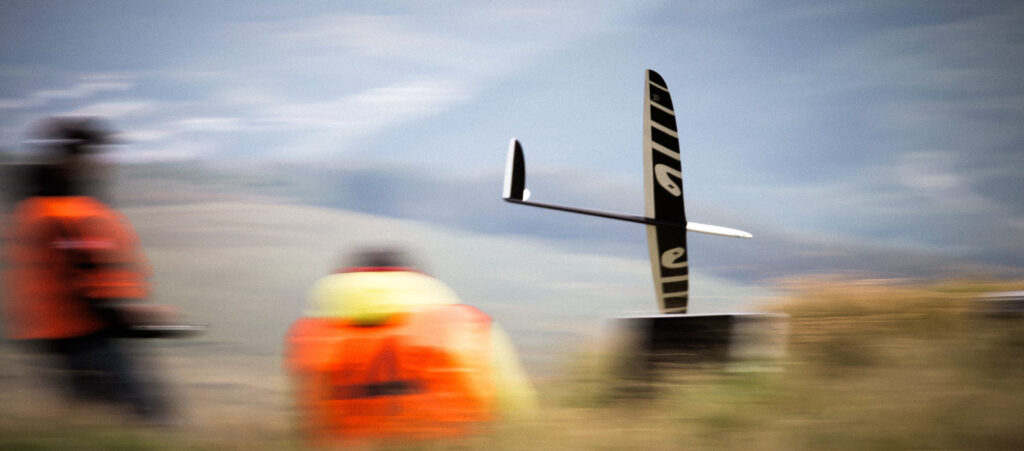
F3F is an RC glider class with with roots going way back to the 70’s. The discipline is internationally recognised, with rules administered by the FAI.
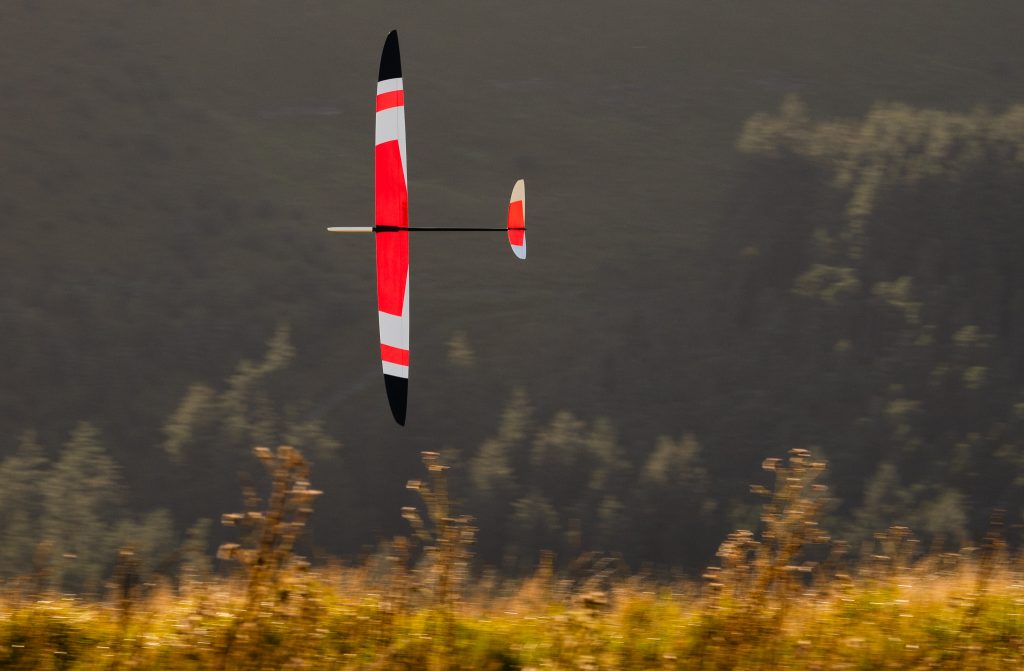
The task is simple: to fly an RC glider over 1 km (10 x 100 meters) as fast as possible, using lift from a hill slope or cliff.
In this post we’ll dive into the format of the competition, and offer some tips.
The F3F course
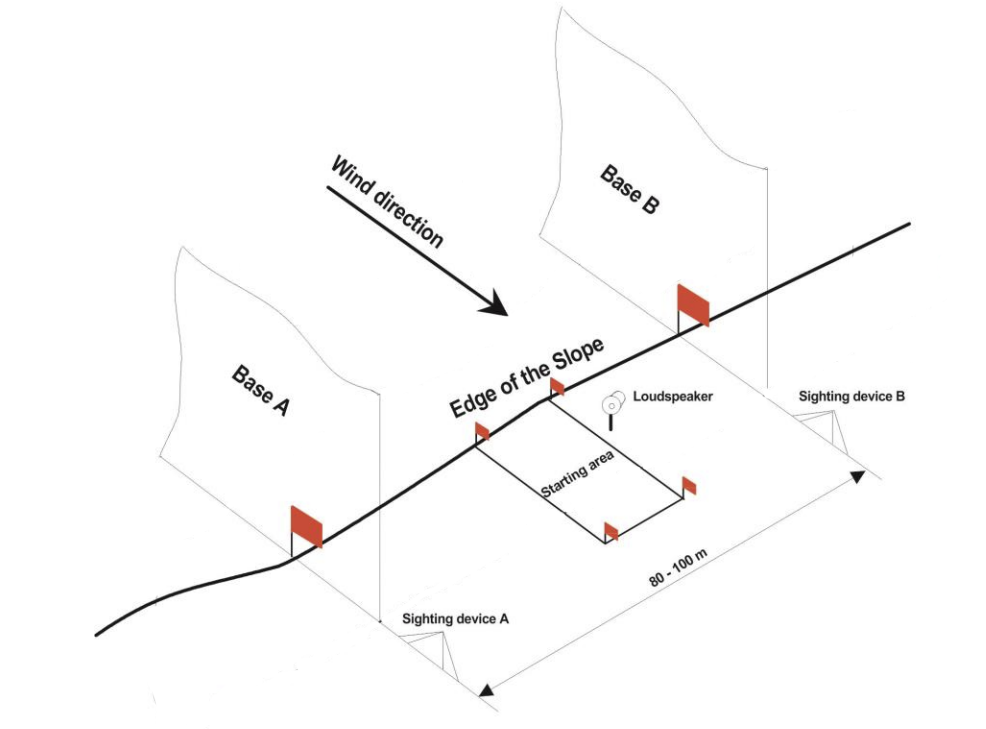
The F3F course is 100 meters long, and parallel to the slope. The ends are marked by bases ‘A’ and ‘B’.
Each base lies on a vertical sighting plane perpendicular to the slope.
A buzzerman is stationed at each base. Their job is to buzz as the model crosses the sighting plane.
The briefing
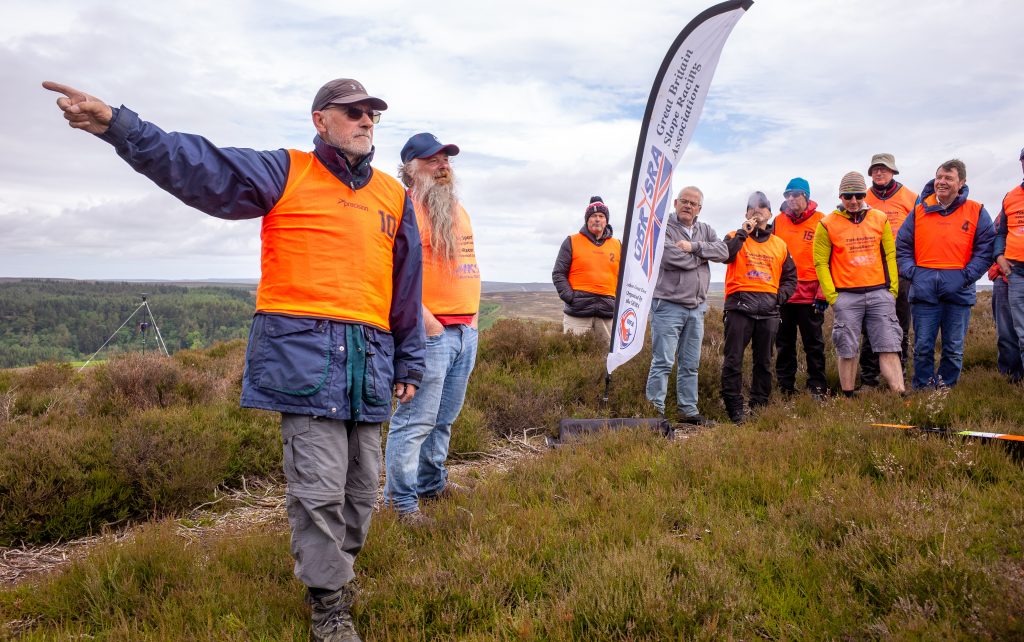
The day starts with a pilots briefing, where the flying order is announced and any local rules explained.
Then it’s time to get ready for your first run!
Your turn to fly!
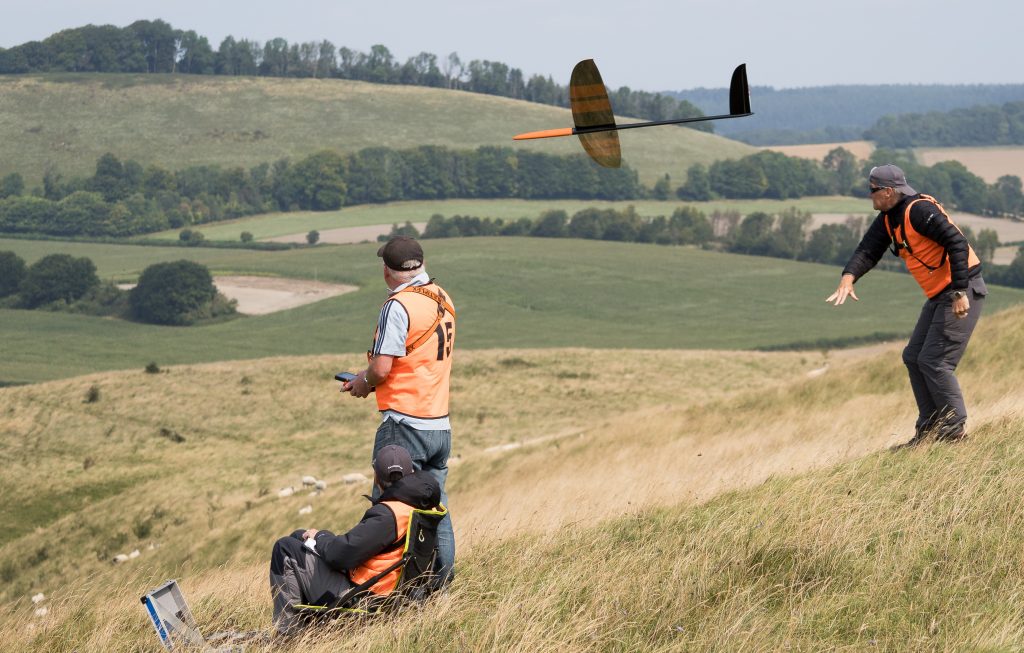
Your model is launched by a helper.
You then have 30 seconds to gain height before entering the course at base A, at which point the timer is started.
You now have to fly 10 legs back and forth between the bases, as quickly as possible!
Pinging round the turn
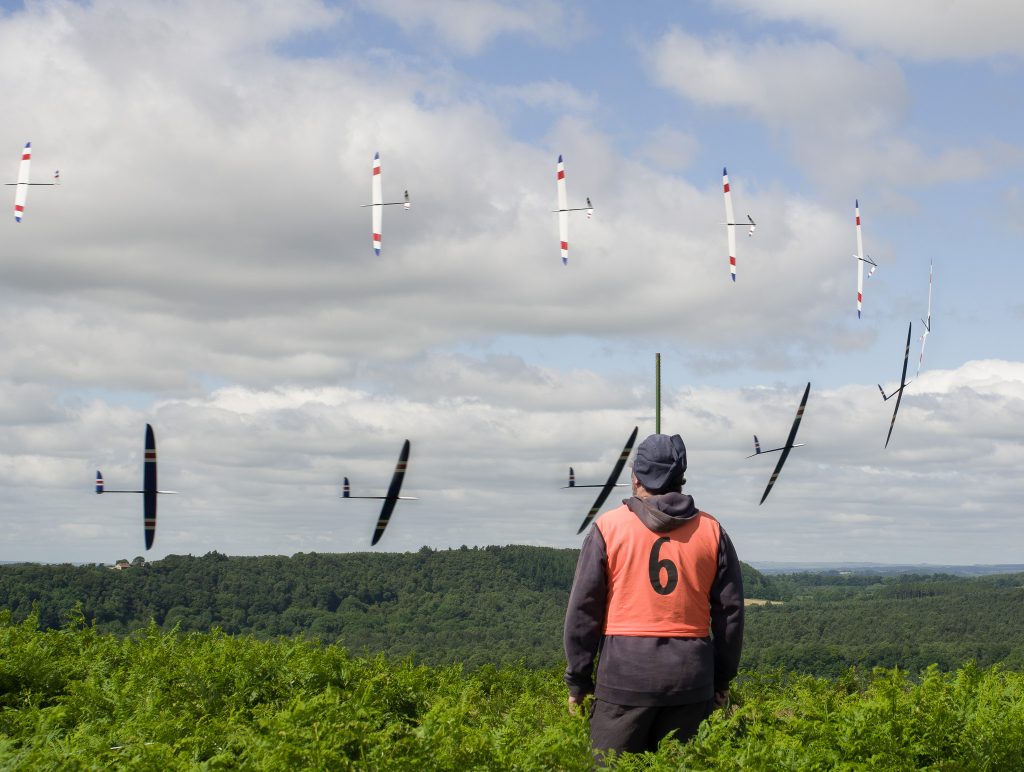
As you approach each base, you’ll start a 180 degree turn. The buzzerman will signal as you pass the base.
If you ‘cut’ the base, you must go back and redo the turn!
As you complete the 10th and final leg, the timer is stopped and the time recorded.
How the scoring works
Each pilot flies once per round. Fastest time in the round scores 1000 points with others scored pro-rata.
Several rounds will normally be flown. The pilot with the highest aggregate score is the winner!
How to achieve a fast time
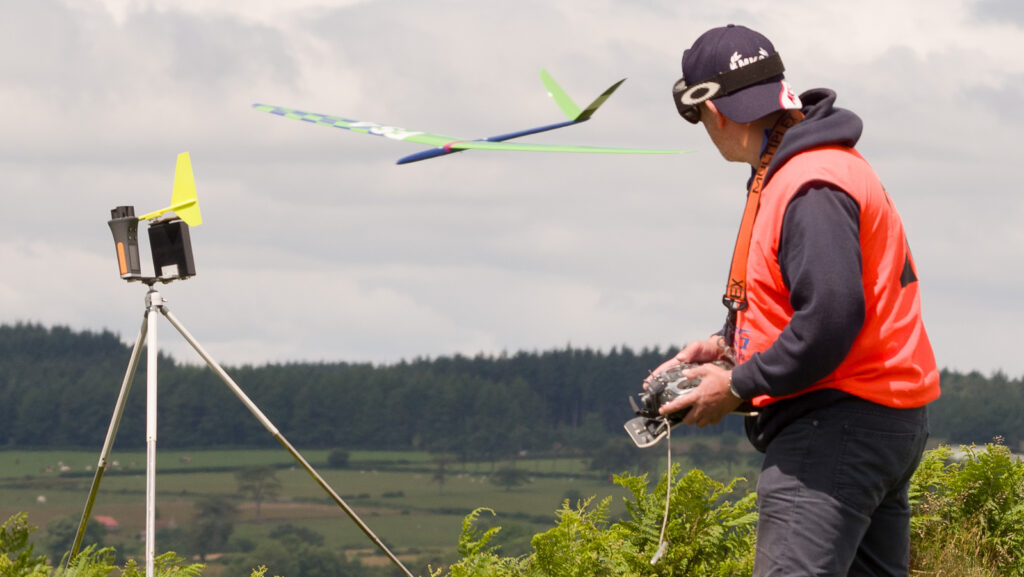
Achieving a fast time (30 to 45 seconds, depending on conditions) requires a combination of smoothness and anticipation, as well as trimming and ballasting skills…
… which is why these events are a great way to increase your knowledge!
Choosing a plane
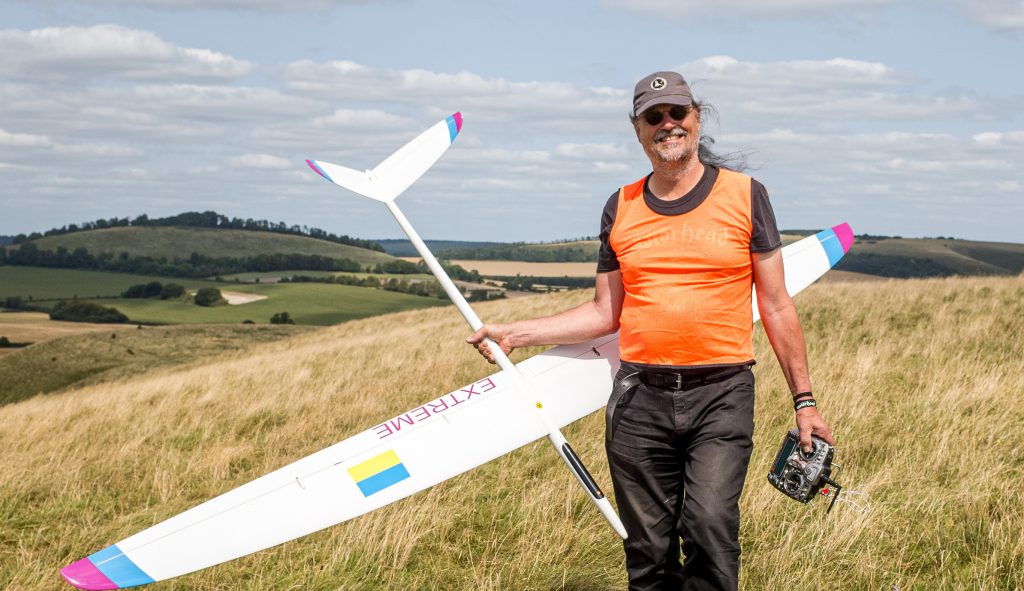
If you’re new to F3F, a sport model is perfectly fine.
Later on you may want to invest in a 2.8 – 3.0 meter F3F model.
Pre-event check list
Before setting off for an event:
- Check airframe and electronics are sound
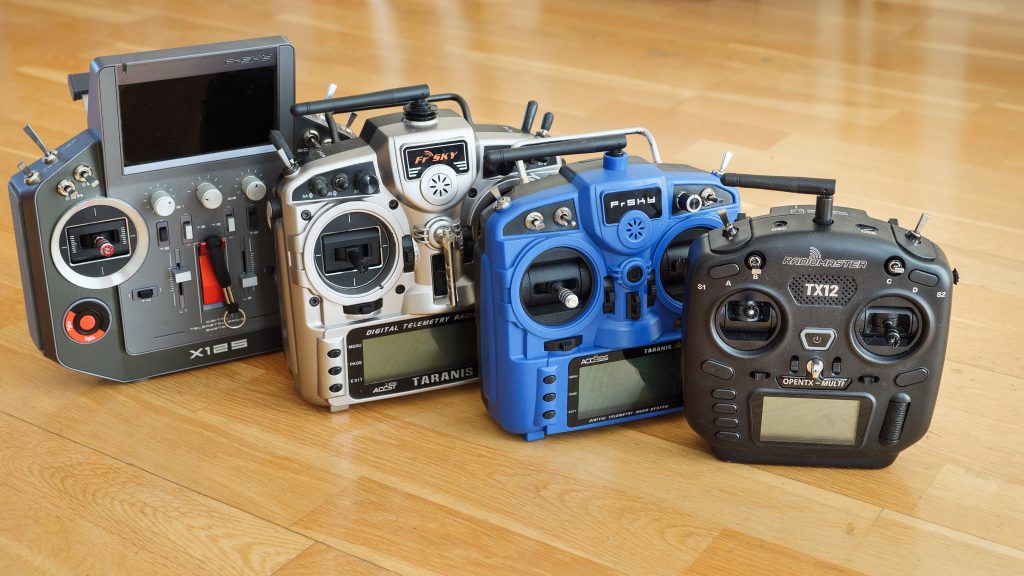
- Make sure your transmitter is correctly programmed
- Check batteries are in good shape and charged
- Check for correct CG
Want to give it a try?
Curious? Then come along to an event and have a blast!
There’s no commitment – you can participate in a single event, or one day of a two-day event.
There will be no shortage of help to make it a fun and rewarding experience!
Videos
Links
- BARCS forum – competition announcements
- GBSRA on Facebook
- Progamming your radio for F3F
- F3F template for OpenTX
- F3F template for Ethos